
Month: January 2018
Looking back on 2017 – A Peace Economics perspective
2017 saw the publication of Doughnut Economics- a model for keeping within planetary boundaries AND meeting social needs. Keeping within boundaries requires practices to go from extractive to regenerative. We share links on doughnut economics, reflect that it is 150 years since the publication of Capital volume 1 by Karl Marx, and offer our observation that signals we are detecting show that peace wanted to make a come-back, going hand in hand with regenerative economic approaches. Popping up in different places, the awareness seemed to be growing of the good sense in designing economic policies that incentivize taking care of Earth and putting peace first. Indeed, Doughnut economics, by insisting economics must remove suffering, and other signals on the importance of restoring land to support livelihoods not industrial practices all point towards peace economics. Continue reading Looking back on 2017 – A Peace Economics perspective
Acceptance
We get into conflict. It is natural. When we create conflict or end up in conflict, it is because we, humanity, have the capability for conflict. On the other hand, we also have the capability to resolve the conflict. Conflict is the end result of a process. It must be possible to reverse that process – and go from conflict back to peace. For everything begins with peace. It’s from peace we come and it’s towards peace we want to go. It is in our nature. Our natural state is peace. Continue reading Acceptance
A Business Plan for Peace
Scilla Elworthy has written a book for all those who want to step out of helplessness and apply their own personal skills to do something about the challenges now facing us. Scilla Elworthy has written the first ever business plan for peace, based on 40 years of pioneering initiatives in the transformation of conflict. Detailing 25 viable methods on international, national and local levels, the book demonstrates that war can be prevented worldwide over a period of 10 years for less than 2 billion dollars. The final chapters present the kind of actions that anyone can take: 10 that can be undertaken locally, 14 nationally and 7 actions to take internationally.
;
How is progress on Goal 16: Peace?
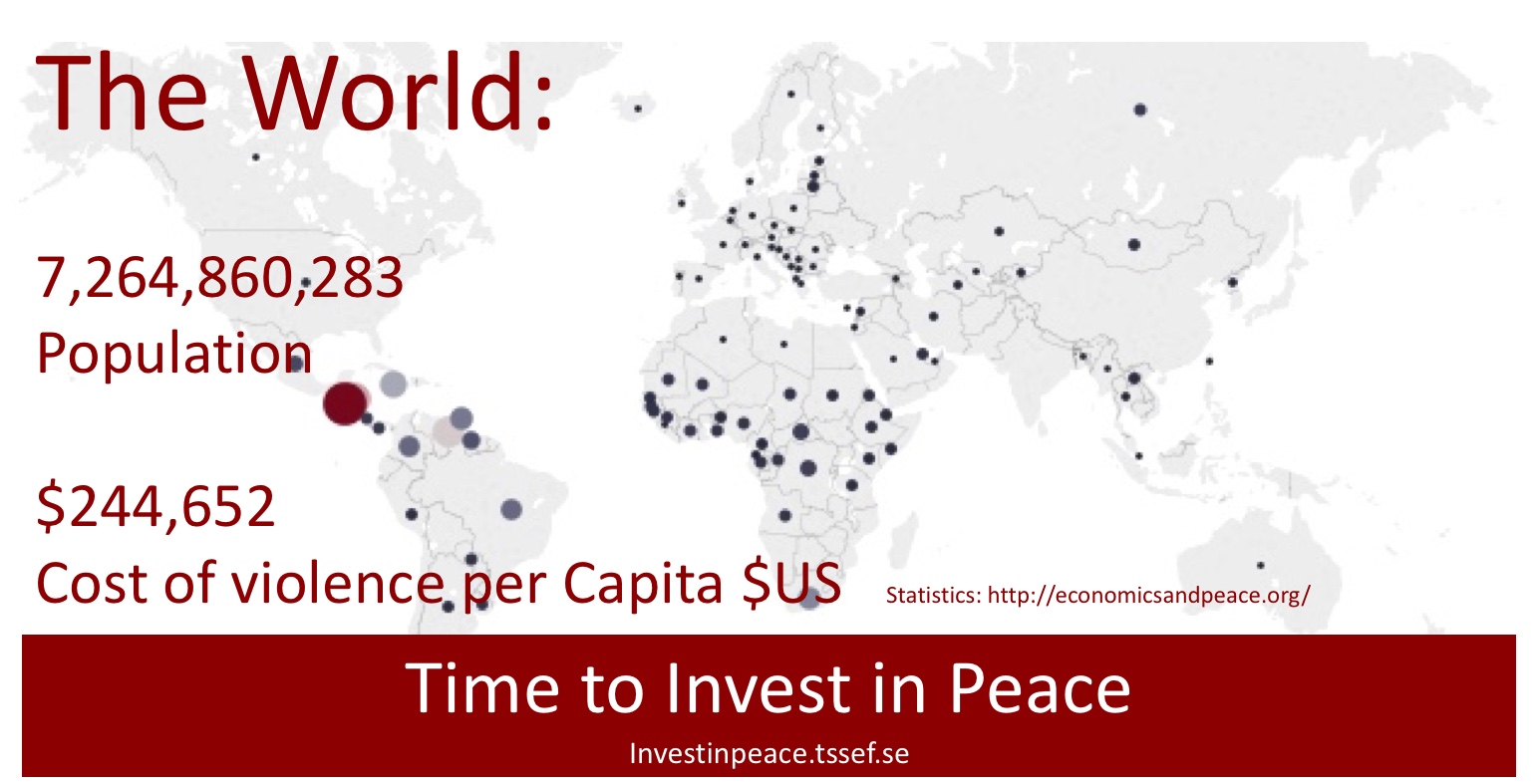 Goal 16 – the ‘Peace Goal’ – is part of the Sustainable Development Goal framework. It is an important recognition that peace is essential for development, as much as development is essential to peace. However, having a goal is only the first step. We need to ensure that Goal 16 is measured, and that concrete steps are taken towards its achievement all the while holding Governments to account.
This is the task taken on by Peace Bank member the Institute for Economics and Peace. Their Goal 16 Progress Report presents a detailed analysis of available data to measure the goal and its targets. It also measures progress achieved to date, country by country. Findings highlight the major challenges facing Goal 16, including methodological issues, political challenges, as well as practical implementation issues around data collection and statistical capacity that if not addressed may undermine the achievement of the goal.
The Nitrate Time Bomb
The BBC writes that a report from the British Geological Survey says nitrogen stored in the ground beneath us could have severe global-scale consequences for rivers, water supplies, human health and the economy.
The nitrate will be released from the rocks into rivers via springs causing toxic algal blooms and fish deaths.
The report underlines the stark message of the 2015 publication of the Stockholm Environmental Institute, that almost half of the processes that are crucial to maintaining the stability of the planet have become dangerously compromised by human activity. One of these processes is the nitrogen cycle.
Researchers are calling for better policies on management of nitrogen.